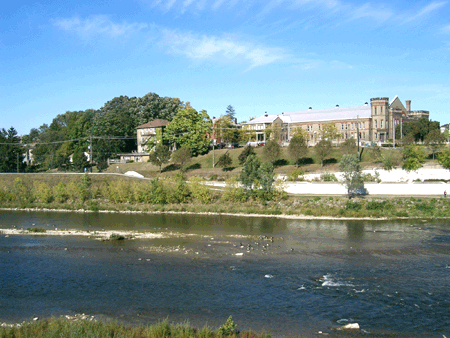
Grand River - Canadian Heritage River
Explore the magic and mystery of one of the Canada's most scenic natural wonders - the Grand River, a designated Canadian Heritage River.
The Grand River outstanding watershed (6800 square kilometers or 2600 square miles) is Southern Ontario's largest, situated in one of the greatest populated areas of Canada stretching from Dundalk in the north to Lake Erie in the south and has a population of 925,000 people in 31 local municipalities and 7 upper tier regions and counties.
The Grand River basin includes almost all of Brant, Waterloo and Wellington Counties, and parts of Dufferin, Gray, Haldimand, Halton, Norfolk, Oxford, Perth and Wentworth Counties.
The Grand River Conservation Authority preserves 18,935 hectares (46,894 acres) of land including water control reservoirs, floodplains, wildlife and wetland habitat, forests and conservation areas for outdoor recreation.
The Grand River maintains its natural grace and bounty for those seeking a quieter and more relaxed lifestyle. However, combine fishing, hiking, boating, camping, biking, birdwatching, scenic, historic and festival sites and you get fun along the entire river.
The Grand River flows are regulated by four main reservoirs. Large reservoirs on the Grand River include Luther Marsh at the headwaters, and Belwood Lake near Fergus. The major reservoirs on the tributaries are Conestogo Lake on the Conestogo River above Glen Allen, and Guelph Lake on the Speed River above the City of Guelph. Many smaller dams and reservoirs are located in communities with a mill pond or impoundment with historic significance.
Learn More About Grand River
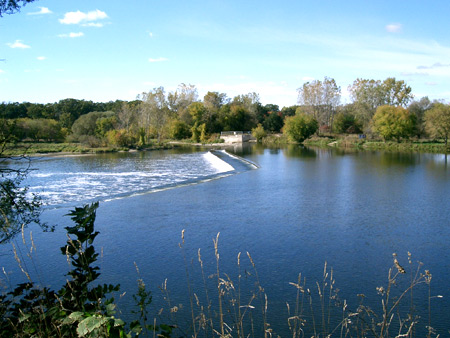
Grand River and its four major tributaries, the Nith, Conestogo, Eramosa and Speed Rivers, is the largest river system entering Lake Erie.
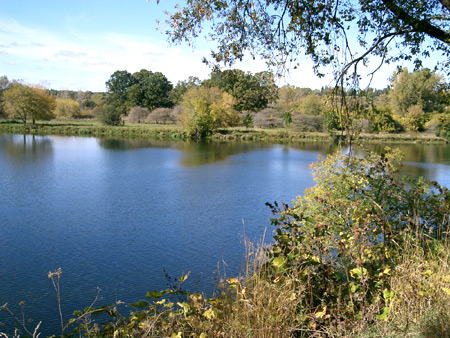
Grand River provides excellent fishing, boating, canoeing and swimming as well as exceptional hiking, skiing, camping, birdwatching, cycling and horseback riding along the watershed.
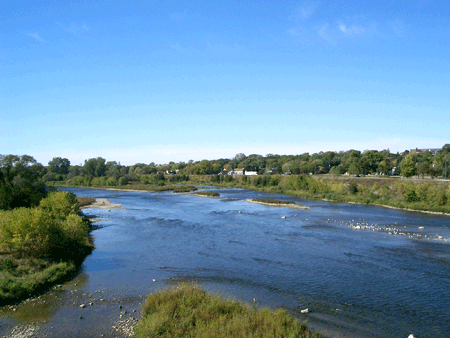
Grand River drops from an elevation of 526 metres above sea level to 174 metres above sea level on its 298 kilometres (185 miles) journey to Lake Erie.
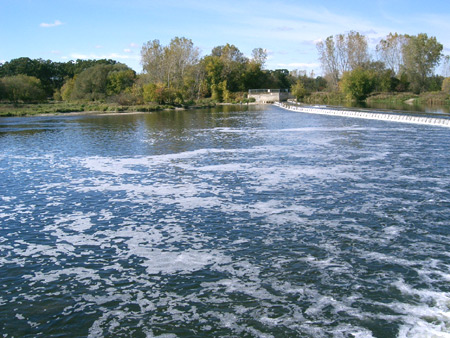
Grand River rises at it's source north of Dundalk and empties into Port Erie at Port Maitland.
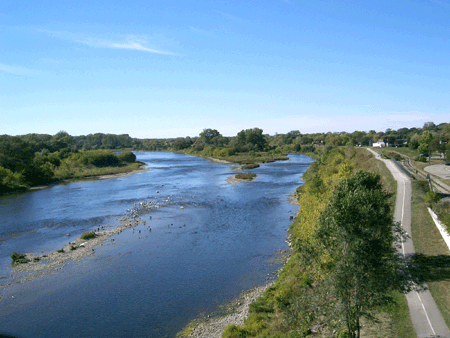
The Grand River watershed includes all the land drained by the Grand River and its tributaries.
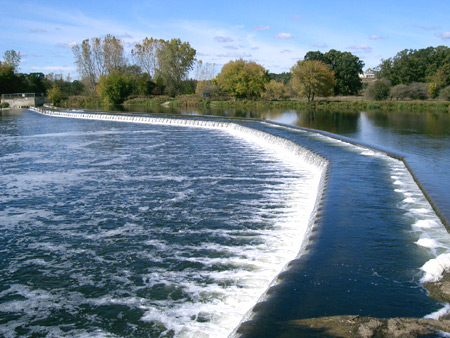
The Grand River watershed is home to close to one million people.
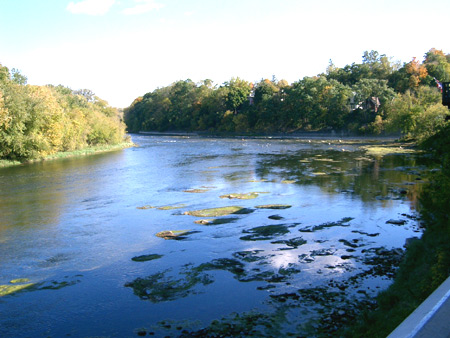
The watershed is an intensive agricultural area, with farms making up about 70% of the watershed.
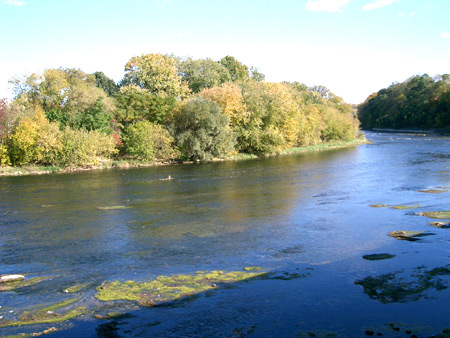
The grand River was designated as a Canadian Heritage River in 1994.
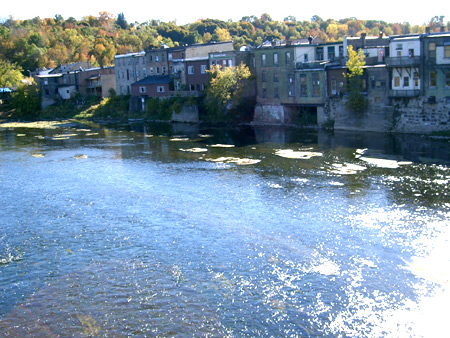
More than 90 species of fish are found in the river system, about half of all species in Canada.
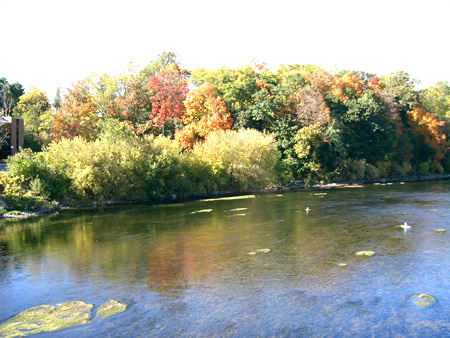
The Grand River valley has been home to Native peoples for more than 10,000 years.
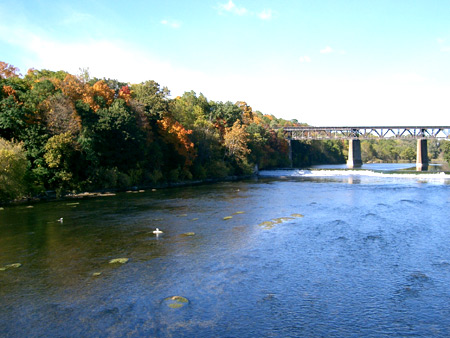
Grand River can be crossed at 35 points travelling the 298 km lenght of the river.
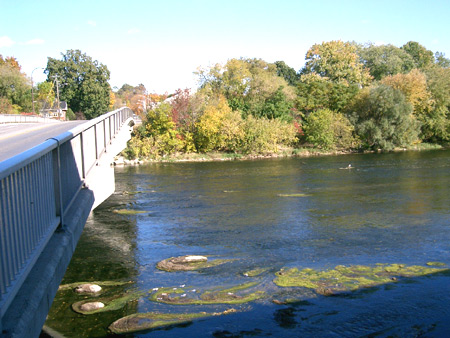
Four major rivers feed into the Grand: the Conestogo, Nith, Speed and Eramosa.
Sponsored content:
SELLER INFO
If you currently own property and are thinking of placing it on the market, get informed about preparing your home for sale, pricing your property appropriately, marketing it effectively and learn everything you can about real estate sale process so you can maximize your... Read more...
MORTGAGE INFO
Arranging to pay for that property you plan to buy is one of the most important financial decisions you will ever make. Regardless of how certain you are that you will get mortgage, it is always good idea to get pre-approved from the mortgage lender of your choice. Read more...